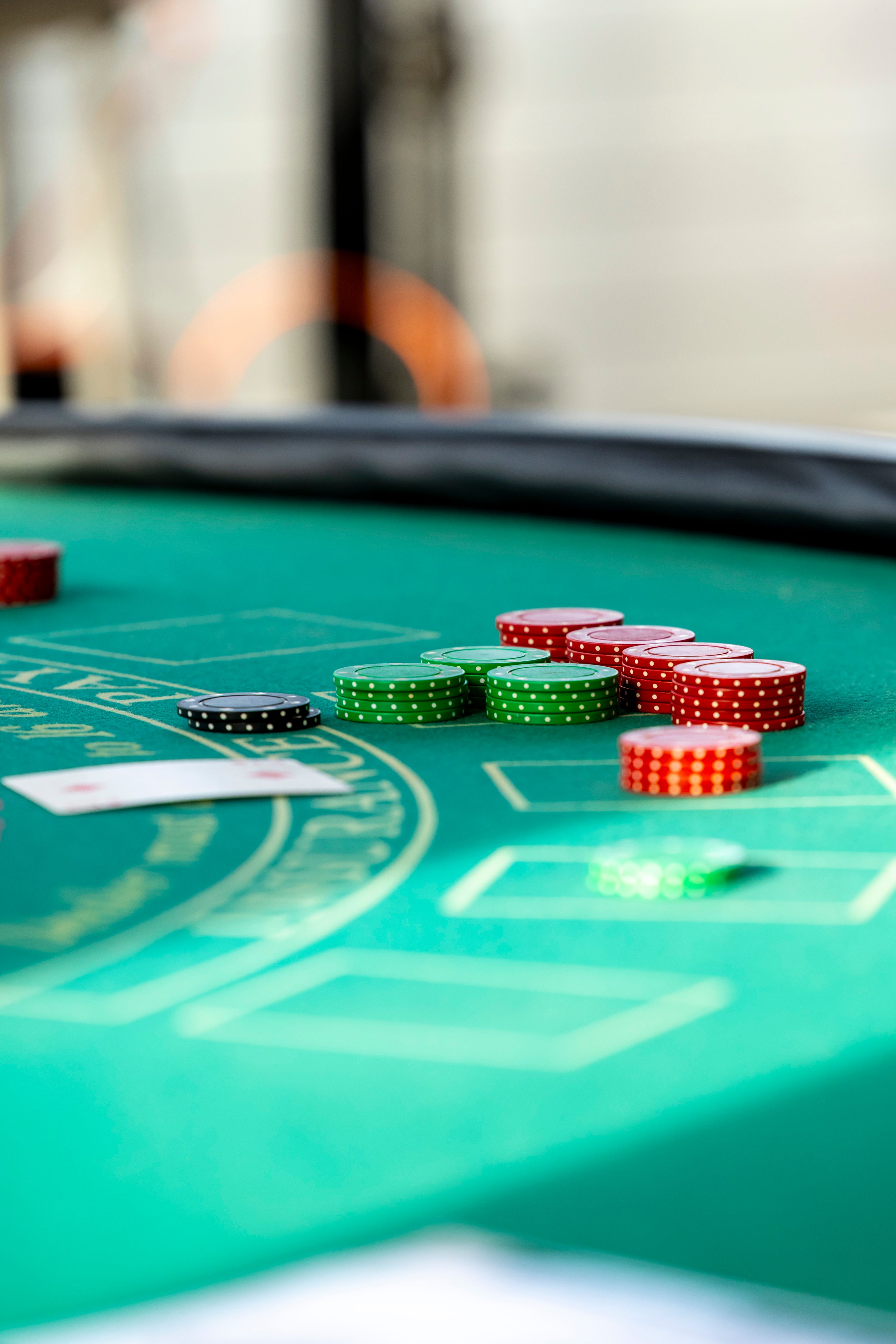
Entering the digital lobby of a contemporary casino platform like Ivibet Casino can feel like stepping into a spacious, glittering hall where every table narrates a different story https://ivibetcasino.or.at/. The pure variety of table games present today goes far past the classic green felt you might envision in your mind. We have moved past the era where blackjack and roulette were singular experiences. Now, each classic game has produced a family of variants, each with its own arithmetic twists, side bets, and calculated layers. Our goal here is to outline that territory distinctly. We wish you to grasp not just the names of these variants, but how a single rule change can modify the house edge, shift the pacing, and completely change the way you approach a game. This knowledge is your base for every session you will ever play.
The Strategic Universe of Blackjack Variants
Standard blackjack is currently a game of beautiful depth, but the variant landscape is where the real strategic texture unfolds. When we examine a title like European Blackjack, the key feature is that the dealer receives only one card face up and waits to draw their second card until after the player has concluded their hand. This apparently minor procedural difference removes the possibility of the dealer checking for a natural blackjack early, which immediately impacts your doubling and splitting choices. You may not know if you are doubling into a losing total, so the optimal strategy changes slightly toward prudence. On the other hand, American Blackjack gives the dealer with both a face-up card and a hole card, permitting for an early look. This grants you more information and makes aggressive doubling and splitting mathematically less risky, creating a swifter, more confident rhythm at the table.
The emergence of side bets has created entire sub-genres of blackjack that resemble hybrid lottery games. Look at the popular 21+3 variant, which combines your first two cards and the dealer’s up-card to form a three-card poker hand. Instantly, your blackjack hand is not just about reaching twenty-one; you are also chasing flushes, straights, and three-of-a-kind combinations on a separate paytable. This drastically changes the betting tempo. You are juggling a base strategy wager while simultaneously gambling on a high-volatility side bet. Another intriguing branch is Blackjack Switch, where you play two hands simultaneously and are allowed to swap the top two cards between them. This player-friendly rule dramatically reduces the house edge on the base game, but the casino adjusts by pushing on a dealer’s 22 instead of paying out, a nuance that compels you to rethink the value of a strong multi-card total entirely.
Perfect Pairs and Pontoon constitute two further distinct evolutionary paths. Perfect Pairs is a uncomplicated side bet that pays when your first two cards create a pair, with escalating prizes for a mixed, colored, or identical pair. It needs zero skill but adds a constant layer of excitement to the initial deal. Pontoon, on the other hand, is a British-born variant that is virtually a separate game despite sharing blackjack’s DNA. Here, both dealer cards are dealt face down initially, and a five-card hand totaling 21 or less—a ”five-card trick”—defeats everything except a natural pontoon. The terminology changes too; you ”twist” instead of hit and ”stick” instead of stand. Grasping these linguistic and mechanical shifts is crucial because a player who sits down at a Pontoon table expecting standard Vegas Strip rules will squander chips through fundamental strategic misunderstandings.
Baccarat Roads and the Culture of the Squeeze
Baccarat types might seem identical to the inexperienced eye, but the gameplay varies dramatically based on tempo, display, and the rituals built in the program. The central mathematical structure stays sacred across almost all versions: you wager on Player, Banker, or Tie, with the Banker bet carrying a minor charge on wins to preserve the house edge. What changes is the theatrical package. Speed Baccarat is created for the high-frequency player who seeks to remove waiting time. Every hand is played face-up right away, with no extended pause, reducing the round time down roughly 27 seconds. This type attracts to the logical mind that seeks pure, unadulterated quantity, letting you to go through many hands in a one session and lean strongly into statistical analysis without pausing for ritualistic card reveals.
At the opposite end of the spectrum lies the heritage-filled experience of games that mimic the ”squeeze.” In a live dealer environment, this is a ritual where the dealer slowly and impressively uncovers the card’s number by peeling back its corners, a practice historically reserved for big-spending players in Macau. Virtual types mirror this tension through animated card glimpses that you can direct, dragging a virtual finger across the monitor to show the pips one by one. This is not simply cosmetic. The squeeze ceremony changes baccarat from a binary win-lose outcome into a tense experience, and many players discover that this psychological involvement aids them manage the mental swings of the game more efficiently than the quick resolution of Speed Baccarat.
We also find structural versions like No Commission Baccarat, which eliminates the normal 5% fee on victorious Banker bets. This sounds like a ideal case, but the casino must get back its profit elsewhere. Normally, this is accomplished by changing the payout on a winning Banker hand that reaches exactly six. Instead of offering even money, a Banker win with a six pays only half your wager. This rule modification changes the tactics not in aspects of which bet to make—Banker is still numerically ideal—but in how you determine your expected profit per session. A shoe heavy on six-value Banker wins will pay out considerably lower than a regular commission game, so you must to be conscious that the ”no commission” tag conceals a alternative kind of price that triggers on a certain, fairly regular result.
Dice-based Games Beyond the Pass Line
When we discuss dice table games, the discussion extends far beyond the traditional craps layout, though grasping that foundation is crucial. Craps itself is a game of multilayered complexity where the pass line bet is just the start. The version experience here comes from how a operator presents the game. Some interfaces strip away the cluttered layout and present a condensed ”Craps First Person” experience, where you handle the dice throw with a timed button press that influences the outcome through a verified random number generator. Others focus on the live dealer format, where a physical table is streamed and a real stickman oversees the action. The variant you choose dictates the pace. A live table runs on a human rhythm with excitement and pauses, while a digital table can process rolls immediately, enabling you to place complex multi-roll bets without feeling rushed by a crowded pit.
Sic Bo is an historic Chinese dice game that has found a current home in online casinos, and its variants are differentiated by the breadth of their betting maps. The standard game uses three dice and offers a staggering array of wagers, from straightforward big and small bets that encompass roughly half the outcomes and pay even money, to particular triple bets that pay as high as 180 to 1. The house edge differs wildly across these options. The small and big bets carry a relatively modest edge of about 2.78%, while the specific triple bets can carry an edge surpassing 30%. A well-designed Sic Bo variant will plainly display the win probabilities for each bet type, and we highly encourage you to examine these before placing chips. Some modern variants feature ”Super Sic Bo,” which applies random multipliers onto specific bet spots after the betting window closes. A winning bet that lands on a multiplied spot can pay out at drastically inflated odds, transforming the game into a blend of prediction and luck that draws players who appreciate the randomness of game-show-style mechanics.
Poker Variants Where the Dealer is Your Only Opponent
Table poker games match you directly against the dealer’s qualifying hand as opposed to other players, which creates a unique strategic environment focused purely on paytable optimization. Casino Hold’em is perhaps the most intuitive entry point because it mirrors the community-card structure of Texas Hold’em so closely. You place an ante, receive two cards, and decide whether to fold or call once you see the flop. The strategic depth lies in knowing which marginal hands merit a call. The general rule we teach states that any pair, any flush or straight draw, and even high-card combinations with strong backdoor potential ought to usually be played. Folding too often wastes your ante, while calling too wide exposes you to the turn and river where the dealer’s hand solidifies. The optional bonus bet pays for premium starting hands regardless of the final outcome, providing a lottery-style element to the strategic core.
Three Card Poker runs on a totally different tempo. Here, you are dealt just three cards and must decide whether to play or fold based on that single, static holding. The dealer must have a hand of queen-high or better to qualify. If they miss qualifying, your ante bet pays even money, but the play bet simply pushes. This qualification rule is the essence of the game’s strategy. You should play every hand of queen-six-four or better, and fold everything lower. The reason is mathematical: folding weaker hands limits the damage when the dealer does qualify and beats you, while playing the minimum qualifying hand guarantees you capture value when the dealer fails to make the cut. The Pair Plus side bet bypasses the dealer entirely and pays based solely on your own hand’s poker value, making it a pure volatility play that runs parallel to the main strategic decision.
Caribbean Stud brought the world to the progressive jackpot side bet that has become a standard of table poker variants. In this game, you go up against the dealer with a five-card stud hand, and the dealer must qualify an ace-king combination or better. The key nuance is that you must wager double your ante to see the showdown, as the call bet is exactly twice the ante. This means you should only call with hands that have a genuine opportunity of beating a qualifying dealer hand, generally ace-king-jack or better. The progressive jackpot bet is a single unit and offers escalating prizes for hands starting at a flush and climbing to a royal flush. The jackpot is often linked across multiple tables and grows in real time, creating a apparent, communal prize pool that adds a layer of excitement entirely distinct from the head-to-head math against the dealer.
Roulette wheels and the Math of Variability

Roulette types are defined almost completely by the wheel’s architecture, and that design dictates the mathematical outcome of every chip you bet. The most dramatic difference is found between European and American Roulette. European Roulette has a single zero pocket, creating a house edge of 2.70%. American Roulette introduces a double zero pocket, which raises the house edge to ndr.de 5.26% without providing any additional payout benefit to the player. This is not a subtle difference; it signifies that over time, the American wheel eats up your bankroll nearly twice as fast for the same betting strategy. We always suggest players to look at the wheel layout before playing, as the visual distinction between a single-zero and double-zero layout is the single most important bit of information you can have before placing your bet.
Beyond the zero count, French Roulette takes the European single-zero wheel and incorporates a layer of player protection through the ”La Partage” or ”En Prison” rules. If you put an even-money bet—such as red, black, odd, or even—and the ball lands on the single zero, you do not lose your wager immediately. Under the La Partage rule, you receive half your stake back, effectively reducing the house edge on those specific bets to a remarkably low 1.35%. The En Prison rule is even more captivating; your losing even-money bet is held ”in prison” for the next spin. If it wins on the subsequent spin, you receive your original stake back. These rules change roulette from a game of pure chance with a steep mathematical disadvantage into one of the fairest propositions in the casino for even-money players.
Modern innovation has also developed wheels that defy the traditional laws of physics entirely. Multi-Wheel Roulette allows you to put a single bet that works simultaneously to up to eight independent wheels spinning at once. This multiplies the action and minimizes short-term variance, as you are far more likely to land your number across eight independent results, though the payout per hit remains the same. Then there are games with racetrack betting interfaces that let you set complex ”call bets” or ”announced bets” with a single click. These are fixed patterns of chips covering specific sectors of the wheel, such as Voisins du Zéro or Tiers du Cylindre. These bets are not just visual gimmicks; they reflect a deep understanding of wheel geography, allowing you to cover contiguous number neighborhoods that would take dozens of individual chip placements to replicate manually.
The Live Dealer Transformation of Classic Tables
Live dealer technology has not simply replicated table games; it has generated entirely new variants that cannot be found in a physical casino without massive infrastructure. Look at Lightning Roulette, which begins with a standard European single-zero wheel but adds a high-voltage multiplier mechanic. Before each spin, a random number generator chooses between one and five ”lightning numbers” and assigns them multiplied payouts from 50x to 500x. If you place a straight-up bet on that number and it hits, you obtain the multiplied payout instead of the standard 35:1. To finance this, the base straight-up payout is reduced to 30:1. This alters the game’s volatility profile dramatically. You are sacrificing a small amount of consistent return on every straight-up win in trade for the chance at a massively outsized payout, making bankroll management a different challenge entirely compared to standard roulette.

Game show hybrids constitute the most extreme branch of the live dealer variant tree, merging table game mechanics with the theatrics of a television studio. Dream Catcher is a vertical spinning wheel with numbered segments, but its true variant offspring like Crazy Time and Monopoly Live extend the concept much further. These games boast a main wheel spin that can trigger bonus rounds, which are fully realized digital environments with their own rules and multipliers. A single spin of the main wheel can transport you to a Pachinko-style wall dropping a puck onto multipliers, or a Monopoly board where a virtual Mr. Monopoly collects properties and builds houses. These are not table games in the traditional sense, but they reside in the live casino lobby and attract players who want the social interaction of a live host combined with the layered bonus mechanics of a video slot. The key to approaching these variants is to grasp that the base game payouts often fund the bonus round potential, so your session will likely comprise frequent small losses punctuated by rare, dramatic bonus entries.
Even within the classic live table space, versions like Infinite Blackjack and Auto-Roulette solve fundamental capacity problems. A physical blackjack table has seven seats; Infinite Blackjack enables an unlimited number of players to occupy the same virtual table and receive the same initial two cards. From there, each player makes independent decisions on their own hand using an on-screen interface. This eradicates the frustration of waiting for a seat and enables you to gamble at your own pace without pressure from other players. Auto-Roulette excludes the dealer entirely from the mechanical process, using a precision-launched ball in a perfectly maintained wheel, which attracts purists who seek the fastest possible game rounds and rely on automated systems over human croupiers who might create subtle, unintentional biases through their throwing rhythm.
Navigating Payment Flows and Platform Security for Table Games
The practical reality of playing table game variants online includes a financial layer that is equally crucial as the rules at the felt. When you deposit into your account to play these games, the payment methods at your disposal will influence how quickly you can act on a strategic insight or a favorable table condition. Modern platforms usually support a spectrum of options including credit and debit cards, a range of e-wallets, prepaid vouchers, and increasingly, direct bank transfer services that bypass intermediary layers. Card deposits are usually instantaneous, allowing you to move from a funding decision to a blackjack seat in under a minute. E-wallets often offer the fastest withdrawal experience, sometimes processing payouts sportwetten.bild.de within twenty-four hours of approval. Bank transfers, while secure, fall at the slower end of the spectrum, and the pending period can extend to several business days. We always advise verifying your account fully before making a significant deposit, as this step is the gateway to unhindered withdrawals later.
Security and licensing are the invisible architecture that assures the variants you play are fair and your funds are protected. A legitimate platform works under the oversight of a recognized regulatory body that mandates regular audits of the random number generators powering each game variant. This means the multi-wheel roulette spin, the blackjack card sequence, and the Sic Bo dice roll are all generated by algorithms that have been tested for statistical randomness and unpredictability. Check for licensing information displayed clearly, usually in the page footer. This indicates that the operator adheres to protocols regarding the segregation of player funds from operational capital, meaning your balance is held in protected accounts. Additionally, responsible gaming tools should be incorporated directly into your account interface, allowing you to set deposit limits, session time reminders, and loss thresholds. These tools are not just a regulatory checkbox; they are the practical means by which you maintain control over the strategic, mathematical engagement that table games demand, ensuring that the pursuit of a perfect strategy never veers into an unmanaged chase.